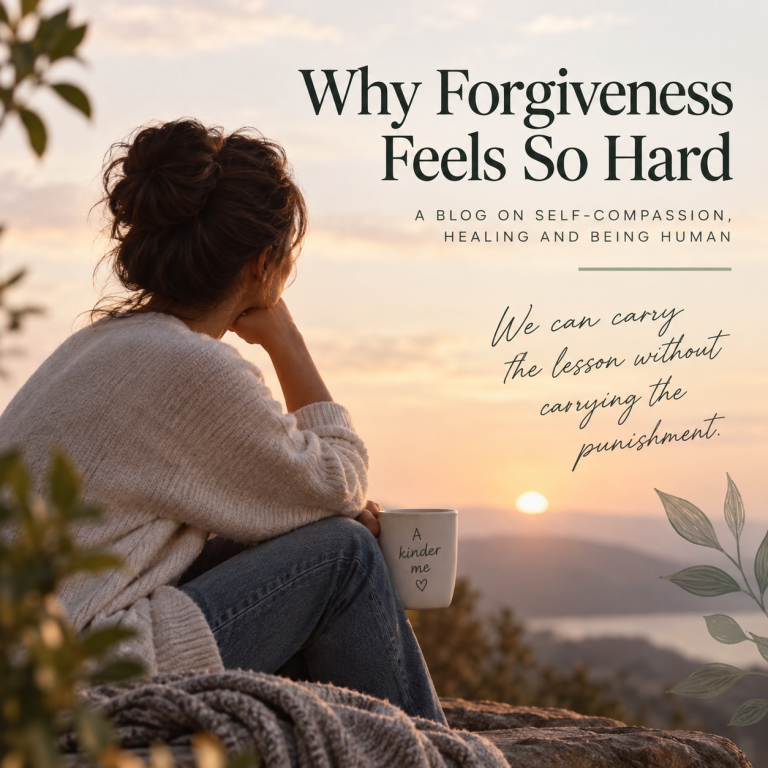

When Success Feels Undeserved After Mistakes
From shame to self-worth – reclaiming permission to thrive
There are people who work hard, reflect deeply, learn from their past and genuinely want a fuller life and yet something in them quietly holds back when opportunity appears.
They hesitate. They minimise themselves. They stay unseen. They settle for less than they desire. They delay the very things they say they want. From the outside it can look like fear of failure, or a lack of confidence. But sometimes something quieter is at work. Success no longer feels fully deserved.
This can happen when we carry unresolved shame from an earlier chapter of life. A mistake was made. Someone was hurt. A relationship ended. A version of ourselves collapsed.
The event may be long over and yet internally something remains unfinished. Not the circumstance itself, but what it came to mean about us. We often believe that mistakes only live in memory. But they can also quietly reshape permission.
Without realising it, we begin to live as though certain things are no longer entirely available to us. Joy feels complicated. Visibility feels risky. Success feels morally uncomfortable and desire feels suspect – and beneath all of that lives a quiet, rarely spoken belief: I had my chance. Perhaps now I should settle for less. Perhaps thriving would mean that what happened didn’t matter. These beliefs are rarely spoken aloud. They live quietly beneath our behaviour.
Shame does not always stop us through dramatic self-destruction. More often it works through subtle limitation. It can look like delaying important decisions. Undercharging for valuable work. Staying hidden professionally when we could be visible. Choosing relationships that sit beneath our real needs. Dismissing opportunities. Doubting praise. Feeling strangely uncomfortable when things begin to go well.
This is why some of the most capable people appear stuck. They are not blocked by lack of ability. They are constrained by an internal ceiling shaped by shame. Some people do not punish themselves through obvious suffering. They punish themselves through reduction.
They become smaller than they need to be. Smaller dreams. Less visibility. An unspoken voice. A smaller life. From the outside this can look like caution or humility. Inside, it is often unresolved shame disguised as responsibility. We believe we are being sensible. Yet quietly — we are sentencing ourselves.
For those of us carrying regret, expansion can feel strangely disloyal to the past.
If I become happy now – did the pain matter?
If I succeed now – have I escaped consequences?
If life opens again – does that mean I was innocent?
These are painful questions and they are almost always unconscious.
Yet thriving in the present does not erase what happened before. We can carry remorse and still receive good. We can remember honestly and still move forward. We can learn deeply and still allow life to grow again.
Here is the distinction that changed everything for me and that I return to again and again with clients: Accountability transforms behaviour. Shame attacks identity.
One leads to growth. The other keeps us emotionally tethered to a chapter that has already ended.
True accountability asks us to acknowledge what happened. To understand the impact. To learn from it. To make amends where possible. and to choose to live differently now.
True accountability does not require a diminished future. It asks for honesty – not a life sentence.
One of the most courageous things we can do after making mistakes is to receive good without apology. To build again. To love again. To be seen again. To create again. To allow life to become larger than the wound.
This does not deny the past. It honours it by allowing the lesson to become wisdom rather than imprisonment.
Sometimes healing sounds like this:
I know what happened. I regret parts of it deeply. I am not proud of everything I have done. And I am still allowed a future.
Success after pain may look different than it once did. It can be less about proving and more about alignment. Less about image and more about meaning. Less about chasing admiration and more about living fully.
For some of us, the second life we build is quieter than the first. But it can be far more true.
Many people believe they are afraid of success. But sometimes what we are really afraid of is what success would mean – that we are allowed to exist fully, even after the mistakes we’ve made.
The past may deserve remembrance. It may deserve grief. It may deserve humility and learning. But it does not deserve to determine the size of the rest of your life.
Thriving now does not erase what happened then. It simply means the story did not end there.